“I’m an only child. Which is kind of bad, because having a brother or sister is like another form of friendship. That’s something I’ve missed out on, except I know that I couldn’t be doing what I am doing now if I had brothers and sisters.” — Natalie Portman
I love harvest.
There is really nothing else like it in my life. There never has been, and I’m convinced there never will be.
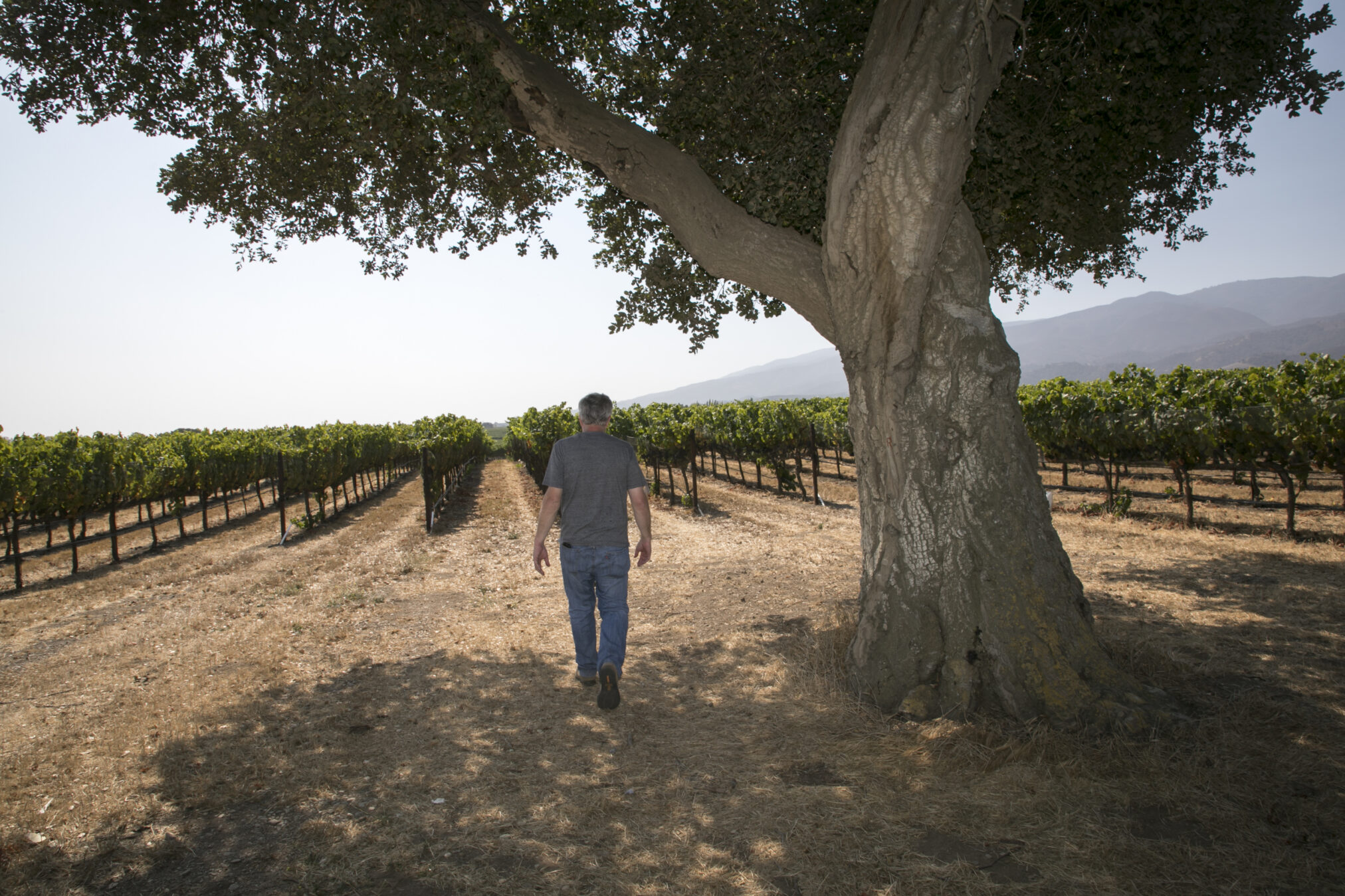
There’s the obvious excitement: racing around vineyards, pulling samples, watching weather forecasts, receiving grapes, sorting fruit, doing punchdowns, making decisions. And there’s the deeper satisfaction of actually making something. We live in a world where so much of what we do involves buying, selling, moving or marketing widgets. Taking grapes from a vineyard and turning them into wine feels different. It feels tangible. Meaningful.
So, it isn’t particularly mysterious why I love harvest. It’s also why people travel to wine country every fall just to experience it, and why some perfectly sane people even volunteer to stand at a sorting table for hours simply to be part of the action.
Somehow, though, I took that attraction a step further and turned harvest into my career.
Even “career” feels like the wrong word.
I’m standing on the precipice of my 33rd harvest, and I’m every bit as excited—and nervous—as I was back in 1994. I wake up at 2 a.m. to check the weather because NOAA’s Detailed Forecast usually updates sometime between midnight and 1. I start talking with Gary Franscioni around 3 a.m. to find out how his vineyards are picking for other wineries. And inevitably I start worrying.
Am I picking too soon?
Am I waiting too long?
Have I forgotten something?
Which brings me to something I learned about myself in therapy in 2020, a year in which, for all practical purposes, I had no harvest at all.
I had been seeing a therapist named Rosa for a while. She’s terrific, by the way, and if anyone in Sonoma County needs someone, I highly recommend her.
One of the reasons I started seeing her was that I felt as though the person I was at home and the person I became while traveling and selling wine were increasingly different people. On the road, I was always “on”—dinners, tastings, meetings, conversations. Then I would come home and have to figure out how to turn that person off and settle back into normal life.
Then 2020 happened.
First came the pandemic, which stopped the travel.
Then came the fires, which essentially stopped harvest.
And without either one, I felt lost.
At some point, Rosa and I started talking about why harvest mattered so much to me.
This puzzled her a little because she had already figured out something that probably won’t surprise many people who know me: I’m something of a control freak.
I’m an only child. I was adopted by two older parents who had seemingly given up any expectation of having a child before I arrived. I was the center of attention. I was spoiled. I was accustomed, in one form or another, to being in charge.
All of that made perfect sense to Rosa.
What didn’t make sense was harvest.
Because when I described harvest to her, what I was describing was chaos.
Half the time, I don’t know what I’m doing on Thursday until Wednesday afternoon. A truck that is supposed to arrive at 8 a.m. shows up at noon. A piece of equipment breaks and what was supposed to be an easy morning becomes an all-day ordeal. The weather changes. Grapes ripen faster than expected. Or slower. Everyone needs something at exactly the same moment.
Why, she wondered, would someone who likes control so much love something that is fundamentally uncontrollable?
And that’s when I had what I still think of as a breakthrough.
I love harvest because, in the middle of all that chaos, I get to decide how I respond to it.
I can’t control whether the truck is late. But I can decide that the fruit goes into the cold room and we sort it tomorrow morning.
I can’t control whether rain suddenly appears in the forecast. But I can decide whether the grapes are ripe enough to pick before the storm—or whether I believe in them enough to let them ride through it.
I can’t control the weather, the trucking company, the equipment, the vineyard or a hundred other things. But I can make the next decision.
There is no other time in my life when I am simultaneously in charge of so little—and yet somehow in charge of everything.
That was the revelation.
Six years later, I’m still not entirely sure what I’m supposed to do with it. Maybe there’s nothing more profound to take away than the satisfaction of understanding myself a little better.
But I think there may be something else.
The world seems increasingly uncertain. There are days when events feel completely beyond our ability to influence, much less control. And perhaps harvest has been teaching me this same lesson for 33 years:
You don’t have to control what happens next.
You only have to decide what you do next.
And so far, that has worked out pretty well for me.
Cheers,
Adam Lee