
We’ve known for a while now that 2026 is shaping up to be an early harvest. What we don’t yet know is just how early. But at this point, it’s not unreasonable to think it could rival — or even surpass — the earliest harvests we’ve ever seen.
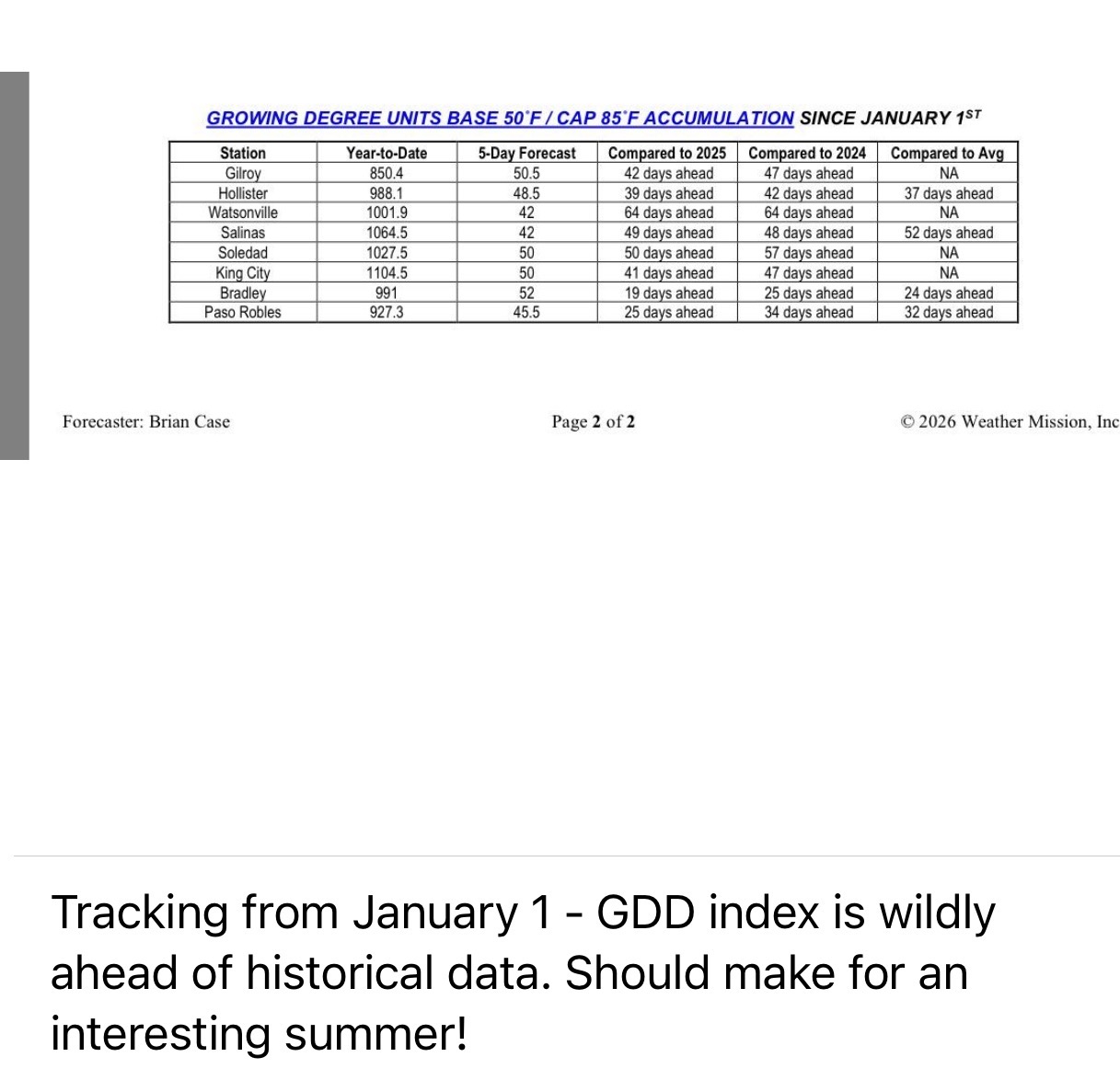
The Central Coast is leading the charge. Sonoma is ahead too, but not quite to the same degree. The driver is clear: heat accumulation. Degree Days are tracking well beyond normal — and even well ahead of both 2024 and 2025. It’s rare to see numbers like this.
And it’s showing up in the vineyards.
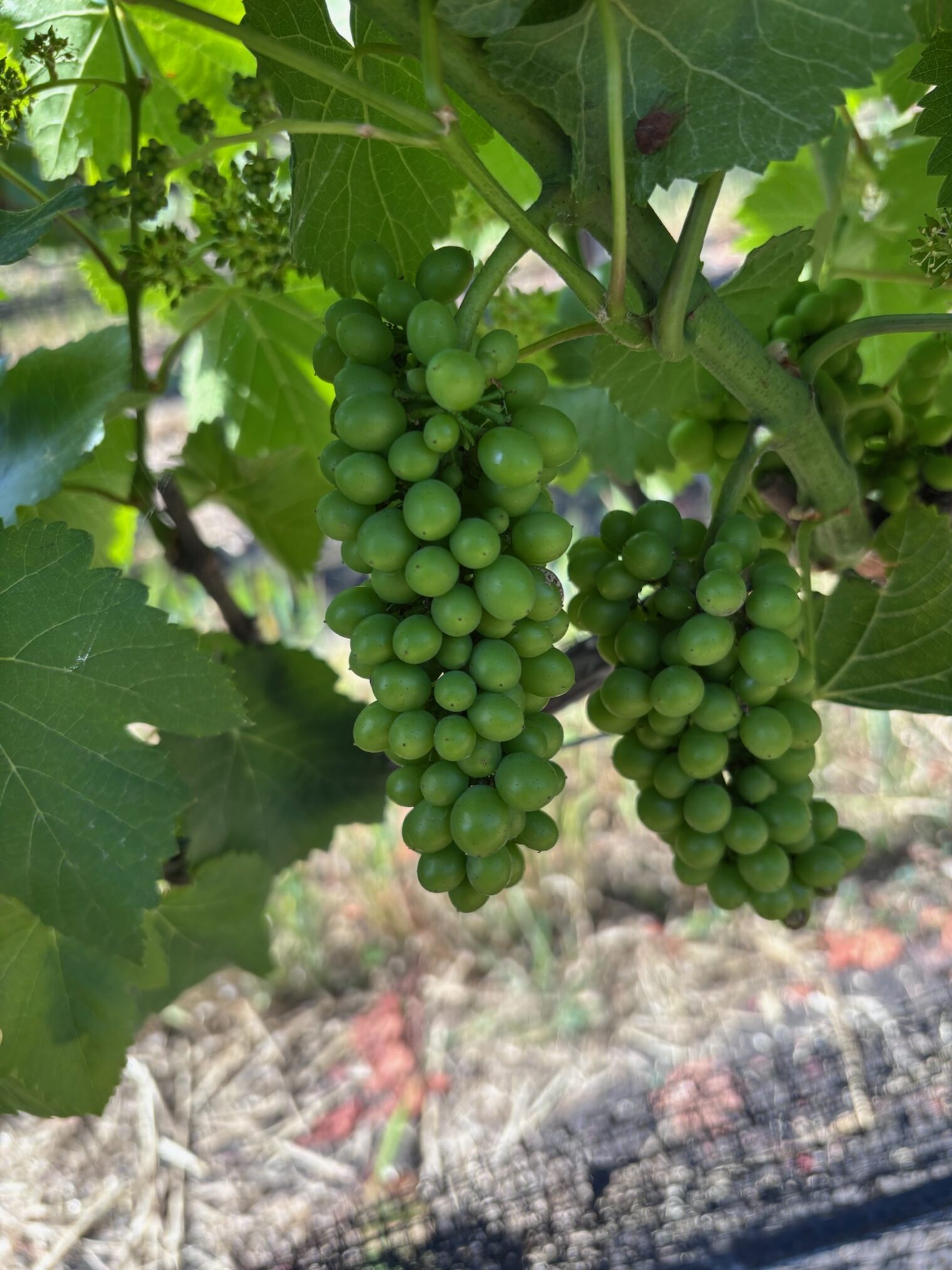
A photo circulating from San Luis Obispo stopped more than a few of us in our tracks — clusters already so advanced that a July harvest doesn’t feel out of the question. July. That’s not a typo.
In the Santa Lucia Highlands, our Garys’ Vineyard fruit isn’t quite that far along, but it’s still notably ahead. We’re already seeing fruit set — at a time when, in some vintages, we’re just approaching bloom.
So what do you do when the season starts running away from you?
For now, we’re adjusting:
- Delaying thinning.
Normally we’d be dropping fruit early — dialing shoots back to two clusters and cleaning up wings and shoulders. This year, we’re doing the opposite. Leaving more fruit on the vine should help slow sugar accumulation. Thinning will wait until veraison, when the grapes begin to color. - Measured irrigation.
Thanks to late rains, the vines aren’t stressed — yet. But as we move deeper into the season, that reserve fades. The plan is to maintain light, consistent watering to keep the vines steady and stretch hang time as much as possible.
From here, it becomes a season of constant adjustment — canopy decisions, leaf pulling, and watching the vines closely to see how they respond.
And in the background, another clock is ticking: getting the 2025 Pinot Noirs into bottle before 2026 comes in fast and early.
Because right now, that feels less like a possibility… and more like a probability.